 English
  Spanish
Dimana Ivanova
Nationality: 149
Email: dimanaiv@abv.bg



Nationality: 149
Email: dimanaiv@abv.bg
Dimana Ivanova
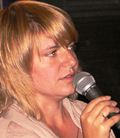
Dimana Ivanova (PhD.) was born in Varna, Republic Bulgaria, in 1979. She earned her Masters in Slavonic philology at the University of Kliment Ochridski in Sofia with a minor in French philology. She has been awarded twice with the Grigor Lenkov prize at the Czech center in Sofia. Her translations have been published in Literary magazine, Panorama, Homo Bohemicus and an Anthology of young Czech authors translated by young Bulgarian translators (2008). She is also the translator of several books from Czech and Slovakian language. In 2006, she started her doctoral studies in Comparative literature at the University of Charles in Prague. She is also an author of a number of critical studies published in Bulgarian, Czech, Slovak and Hungarian conference proceedings. Since 2008, she has also been a regular author of the Czech electronic newspaper www.iliteratura.cz. and since the year of 2008 to the year of 2013 has been a member of the editorial board of newspaper Balgari in Prague. In the year of 2008, she was also awarded a scholarship for a foreign doctoral student in Slovakia and began research at the Slovak Academy of sciences. Her doctoral dissertation is about the comparative aspects of Czech decadent poetry and has been successfully defended in the year of 2011 at the Charles University of Prague. She is the author of the poems' book "Invitation for a Father" (Ergo, 2012). Her poems have been translated and published into English, Czech, Slovak, Spanish, Romanian and Macedonian languages. She has participated in International poetry festivals as Ars poetica in Bratislava and Poetry Nights in Curtea de Arges in Romania. She is currently working as a teacher of French, Arts and culture at High language school in Slovakia and in the editorial board of the newspaper Sanarodnik in Bratislava. She is also a member of the Czech alliance of the journalists, Czech alliance of the translators and the Czech-Slovakian Association of comparative literature.
The Butterfly
She is tender
and fragile
as a vase of Czech porcelain
sad and sensitive
spontaneous
she never says the truth
not because she doesn’t want to,
but because she doesn’t know it
she flies without aim
up the ruined Palace of Zichy
hurt butterfly
lost in the melancholy of the city
tired
she continues to fly
without aim.
She is a big colourful butterfly
with small grey blind eyes
which express eroticism and dead.
I am confused,
but I’m raising my hand to catch her.
But she turned into
a big black bat
bit my heart
and spat it out.
Translated from Bulgarian into English by: Katerina Stoykova-Klemer
Пеперудата
Тя е нежна
и чуплива
като ваза от чешки порцелан
тъжна и чувствителна
спонтанна
никога не казва истината
не защото не иска
а защото не я разпознава
кръжи объркано
над съборения Жичи Палац
ранена пеперуда
загубена в меланхолията на града
изморена
продължава да лети
без посоки.
Тя е огромна цветна пеперуда
с малки сиви слепи очи
в които се чете еротика и смърт.
Объркана съм, но радостна
протягам ръка да я уловя.
А тя се превърна в огромен черен прилеп
отхапа сърцето ми
и го изплю.
Half a boat
For the first time in my life
I am not feeling at home here.
For the first time in my life
Prague is so sad with grief.
I am walking on the streets,
far away from my desires
to hug you
and kiss you.
To melt you!
I am walking.
And in my sadness I am gazing at the white screen
of the twilight, where this night
is projected a film from my youth.
And suddenly – you become small,
so small,
with your eyes blue,
with your hands white.
Your eyes are bluer than the sea in my childhood,
whiter than sea flagpoles.
You become my husband,
half a boat,
and you are mournfully swimming
in my pupil.
You, Marian Polkoráb,
you landed
in the eyes of my Slovak sea!
Translated from Bulgarian into English by: Dimana Ivanova
Половин кораб
За пръв път
не се чувствам у дома си тук.
За пръв път
Прага е толкова тъжна от скръб.
Вървя по улиците,
чужди на желанията ми
да те прегърна и
да те целуна.
Да те стопя!
Вървя.
И тъжно гледам към екрана светъл
на залеза, където тази вечер
се прожектира филм от младостта ми.
И изведнъж ти ставаш малък,
толкоз малък,
със сините очи,
с ръцете бели.
По-сини от морето в мойто детство,
по-бели и от мачти параходни.
Ти ставаш мой съпруг,
половина кораб,
и тъжно плуваш
в моята зеница.
Ти, Мариян Полкораб,
намерил пристан
в очите на морето ми словашко!
The Girls with Short Skirts
The girls with short skirts
loiter around the Tesco stores.
The girls with nice arms
lazily push empty carts.
Girls, girls, girls,
falling-apart
silicone dolls –
jellied,
with cakelike lips,
with bodies whiter than feta,
at the beginning of the 21st century
rich gentlemen dine with you.
And your tables are so empty! ...
Why do you look at me, sadder than Malvina,
with eyes pretty, gentle and blue?
Why are your carts empty? ...
You, prostitutes, companions and mistresses,
the economic crisis lulled you,
uprooted, yanked out and robbed
the feeble dreams from your wings,
distressed, dismantled and crashed
the labor of your phosphor destinies.
Translated from Bulgarian into English by: Katerina Stoykova-Klemer
МОМИЧЕТАТА С КЪСИТЕ ПОЛИЧКИ
Момичетата с късите полички
се развяват из магазините „Теско”.
Момичетата с хубави ръчички
лениво бутат празните колички.
Момичета, момичета, момичета,
разпадащи се
кукли силиконови –
желирани,
със устни като кейк,
и със тела, по-бели от едам,
в началото на 21-ви Век,
вечерят с вас богати господа.
А вашата трапеза тъй е празна!...
Защо ме гледате, по-тъжни от Малвини,
с очи красиви, ласкави и сини?
Защо са празни вашите колички?...
Вий, проститутки, компаньонки и метреси,
икономическата криза ви унесе,
изкорени, изтръгна и ограби
крилцата от надеждите ви слаби,
покруси, демонтира, и разби
труда на фосфорни ви съдби.