Alma dança em seu berço Se for verdade que a alma
nasce velha
e a vida, verdadeira e jovem,
então somos tu e eu, velho e jovem,
um com o outro.
Tal fusão é perigosa.
Sejamos honestos: todos os dias
convivemos com o Destino
como pessoas que vivem em um delta
atravessando marés baixas e altas.
Os outros estão acostumados com a lua;
nós vivemos lá.
O coração pulsa livre, e a alma
dança em seu berço.
© Niels Hav *
Soul Dances in its Cradle By NIELS HAVIf it is true that the soul
is born old
and grows younger throughout life,
then you and I are both older
and younger than one another.
That kind of fusion is dangerous.
Let’s be honest: every day
we live with Fate
just like people who live in a delta
overrun by tides.
They are intimate with the moon;
we live on it.
The heart beats freely, the soul
dances in its cradle.
Translated by Per Brask & Patrick Friesen CAN DANS EDİYOR BEŞİĞİNDECanın yaşlı doğup
yaşadıkça gençleştiği
doğruyse eğer,
senle ben birbirimizden
hem yaşlı hem de genciz.
Böyle bir birleşme çok tehlikeli.
Açık konuşalım şimdi: Yazgımızla
birlikte yaşıyoruz her gün,
gel-gitlerle yıkanan bir deltanın
ağzında yaşayan insanlar gibi.
Ay ile sıkı ilişkisi var onların,
biz ise üzerinde yaşıyoruz ayın.
Özgürce çarpıyor yürek, can
dans ediyor beşiğinde.
Türkçesi: Hüseyin Duygu & Murat Alpar© Niels Hav *
Душата танцува в своята люлкаНилс Хав [Дания]
Ако е вярно, че душата
е родена възрастна
и през живота се подмладява,
ти и аз сме и по-възрастни
и по-млади един от друг.
Такова едно обединение е опасно.
Нека бъдем откровени: всеки ден
живеем със Съдбата,
точно като хора живеещи в една делта
заливана от приливи и отливи.
Те познават добре луната;
ние живеем на нея.
Сърцето бие свободно, душата
танцува в своята люлка.
*
Sjælen danser i sin vugge
Hvis det er sandt, at sjælen
er født gammel
og livet igennem bliver yngre,
så er du og jeg både ældre
og yngre end hinanden.
Sådan en fusion er farlig.
Lad os være ærlige: hver dag
bor vi sammen med Skæbnen,
ligesom folk der lever i et delta
gennemstrømmet af ebbe og flod.
De er fortrolige med månen;
vi bor på den.
Hjertet slår frit, sjælen
danser i sin vugge.
© Niels Hav En defensa de los poetas¿Qué hacer con los poetas?
La vida los maltrata
se ven tan lastimeros vestidos de negro
con la piel azulosa de sus borrascas interiores.
La poesía es una horrible enfermedad
los infectados deambulan quejándose
sus gritos contaminan la atmósfera
como escapes de estaciones atómicas de la mente.
Es alto tan sicótico.
La poesía es un tirano
desvela por las noche y deshace matrimonios
arrastra a la gente en mitad del invierno a desoladas cabañas
donde permanecen ateridos, con sus orejeras y gruesas bufandas.
¡Imagínense qué tortura!
La poesía es una plaga
pero que la gonorrea, una abonimación terrible.
Pero considern a los poetas,
no es fácil para ellos.
Trátenlos con paciencia.
Son histéricos como si estuvieran embarazados de gemelos
crujen los dientes cuando duermen
comen tierra y hierba.
Se pasan horas en medio del viento ululante
atormentados por asombrosas metáforas.
Todos los días son sagrados para ellos.
Oh, por favor, apiádense de los poetas
son sordos y ciegos
ayúdenlos a cruzar las calles por donde van dando tumbos
con su invisible impedimento
recordando toda suerte de cosas.
De vez en cuando uno se detiene a escuchar una sirena distante.
Sean considerados con ellos.
Oh, por favor, apiádense de los poetas
son sordos y ciegos
ayúdenlos a cruzar las calles
por donde van dando tumbos
con su invisible impedimento
recordando toda suerte de cosas.
De vez en cuando
uno se detiene a escuchar una sirena distante
Sean considerados con ellos
Los poetas son como niños locos
expulsados de su casa por toda la familia
ruegen por elos
han nacido tristes
sus madres lloraron por ellos
acudieron a médicos y abogados
y hasta tuvieron que darse por vencidas
por temor a peder la cabeza.
Oh, lloren por los poetas!
No tienen salvación.
Infectados de poesía como leprosos secretos
están presos en su mundo fantasioso
de fantasmas negativos
Cuando un claro día de verano,
de sol radiante,
vean a un pobre poeta
salir tambaleante de su edificio
palido, como un cadaver
desfigurado por las especulaciones
¡Acérquense a auxiliarlo!
Amárrenle los cordones de los zapatos
llevenlo hasta el parque
y ayúdenlo a sentarse en un banco al sol.
Cantenle un poquito
comprenle un helado y háganle un cuento
para que no se sienta tan triste.
Esta completamente arruinado por la poesía.
Autor: Niels Hav
Traducido al español por Orlando Alomá.Poema de Niels Hav. [Dinamarca]
Traducido al español por Orlando Alomá.
Dedicado a Fantasma Bet, el Dragón.
Para que ea que no es el único que en
este mundo que entra a la sinrazón con
razón.
*
Visit from My Fatherby Niels HavMy dead Father comes to visit
and sits down in his chair again, the one I got.
'Well, Niels!' he says.
He is brown and strong, his hair shines like black
lacquer.
Once he moved other people's gravestones around
using a steel rod and a wheelbarrow, I helped him.
Now he's moved his own
by himself. 'How's it going'? he says.
I tell him all of it,
my plans, all the unsuccessful attempts.
On my bulletin board hang seventeen bills.
'Throw them away',
he says, they'll come back again'!
He laughs.
'For many years I was hard on myself',
he says, 'I lie awake mulling
to become a decent person.
That's important'!
I offer him a cigarette,
but he has stopped smoking now.
Outside the sun sets fire to the roofs and chimneys,
the garbagemen make noise and yell to each othergoes to the window and looks down at them.
'They are busy', he says, 'that's good.
Do something!'
Translated by Per K. Brask & Patrick Friesen *
BESØG AF MIN FAR Min døde Far kommer på besøg
og sætter sig i sin stol igen, den jeg fik.
Nå, Niels! siger han.
Han er brun og stærk, hans hår skinner som sort lak.
Engang flyttede han rundt på andres gravsten
med stålstang og sækkevogn, jeg hjalp ham.
Nu har han flyttet sin egen
selv. Hvordan går det? siger han.
Jeg fortæller ham det hele, alle mine planer,
de mislykkede forsøg. Inde på opslagstavlen
hænger der sytten regninger. Smid dem væk,
siger han, de skal nok komme igen!
Han ler.
I mange år var jeg på nakken af migselv,
siger han, jeg lå vågen og spekulerede
for at blive et ordentligt menneske.
Det er vigtigt!
Jeg byder ham en cigaret,
men han er holdt op med at rge nu.
Udenfor tænder solen ild i tage og skorsten.
Skraldemændene larmer og råber til hinanden
nede i gaden. Min Far rejser sig
går hen til vinduet og ser ned på dem.
De har travl, siger han, sådan skal det være.
Bestil noget!
First published in Niels Hav: 'Når jeg bliver blind', Gyldendal DK
English translation published in: 'God's Blue Morris, A Collection of Poems by Niels Hav',
translated by Brask & Friesen, Crane Edition, CANADA
*
LA VISITA DI MIO PADRE Mio Padre morto è venuto a visitarmi
e si siede ancora sulla sua sedia, l'unica che ho.
Bene, Niels! dice.
È bruno e forte, i suoi capelli brillano come lacca nera.
Uno volta portava in giro pietre scolpite di altra gente
usando un bastone d'acciaio ed una carriola, io lo aiutavo.
Ora ha mosso i suoi averi
da sé. Come ti va? dice.
Io gli racconto tutto,
i miei piani, tutti i tentativi senza successo.
Sul mio conto sono i sospeso di diciassette bollette.
Buttale via,
dice, torneranno di nuovo indietro!
Ride.
Per molti anni sono stato duro con me stesso,
dice, mi sono risvegliato confuso
per diventare una persona decente.
Questo è importante!
Gli offro una sigaretta,
ma ha smesso di fumare ora.
Fuori il sole tramonta sui tetti ed i camini,
lo spazzino fa rumore e grida verso gli altri
nella strada. Mio Padre si alza,
va verso la finestra e li guarda dall' alto.
Stanno lavorando, dice, va bene.
Facciamo qualcosa!
[translated into Italian by Geatano Longo]*
BABAMIN ZIYARETI Ziyarete geldi sevgili babam
Ve oturdu yeniden sandalyesine, ondan kalmýþ olan
Ee... Niels dedi
Güneþ yanýðýydý ve güçlüydü,
kara bir cila gibi ýþýldýyordu saðlam
Bir zamanlar mezar taþlarýný taþýrdý baþkalarýna
Çekik bir mil ve bir el arabasýyla
Yardým ederdim ona
Þimdi kndisininkini taþýyor
kendi baþýna. 'Nasýl gidiyor? Dedi
Her þeyi anlattým ona
tasarýlarýmý, baþarýsýz giriþimlerimi
On yedi fatura asýlýydý not tahtasýnýn üstünde
'At þunlarý!' dedi geri gelirler tekrar
Güldü
'Yýllardýr kendime hiç acýmadým'
dedi, uykusuz geceler geçirdim derin derin düþünüp
Saygýya deðer nasýl olurum diye
Önemlidir bu!
Bir sigara verdim ona
ama sigarayý býrakmýþmýþ artýk
Dýþarýda güneþ tutuþturdu camlarý bacalarý
Çöpçüler gürültü yapmaya baþladý ve baðrýþtý birbirine
caddede. Kalktý babam yerinden
pencereye gitti ve baktý onlara
'Çok meþguller' dedi, 'Ýyi bu!'
'Bir þey yap!'
Niels Hav, Danimarka [translated from the Danish by Hüseyin Duygu]*
Apa látogatása Halott apám látogatóba jön.
Leül az egyetlen székemre,
és azt mondja: Na, Niels!
Erõsnek látszik, lebarnult, fekete haja ragyog.
Volt, hogy mások sírköveit mozgatta, vasrúddal, talicskával,
és én is segítettem neki.
Most maga mozdította el a saját sírkövét.
Hogy megy a sorod? - kérdezi.
Mindenrõl beszámolok,
beszélek neki a terveimrõl és a kudarcaimról.
A falon látja a tizenhét kifizetetlen számlát.
Dobd ki ezeket - mondja -, visszajönnek úgyis.
Nevet.
Évekig viaskodtam magammal - mondja -,
ébren feküdtem, és azon tépelõdtem,
hogyan kell rendes embernek lenni.
Az fontos.
Megkínálom cigarettával,
de már abbahagyta a dohányzást.
Odakinn a naptól felszikráznak a tetõk és a kémények,
a szemetesek zörögnek, és kiabálnak az utcán.
Apa felkel,
az ablakhoz megy, lenéz.
Szorgoskodnak - mondja. - Ez jó.
Csinálj te is valamit!
[Mándy Gábor fordítása] biografia:
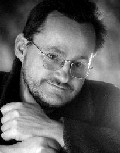
NIELS HAV; the Danish poet and short story writer, is living in Copenhagen.
He has travelled widely in Europe, Asia, North and South America.
He is married with four chldren.
'God's Blue Morris', a selection of Niels Hav´s poetry has been published in Canada.
His most recent collection, from which these poems come, is 'We Are Here' ['Grundstof',Gyldendal 2004] - also translated into English, but not yet published.
A collection of poetry is published in Macedonian by Spektar Press.
NH has published five collections of poetry and three of short fiction.
A few poems and short stories are translated into a number of languages
as English, Spanish, Italian, Turkish, Portuguese, etc.
He has been the recipient of a number of prestigious awards.
.
HAV, Niels: We Are Here Translated from the Danish by Patrick Friesen & P.K. Brask
November 2006
ISBN 0-9781587-2-5
Poetry; 60pp; 5.25x8.75; Perfectbound
BookThug 2006 Fall Titles
jay@bookthug.ca
Niels Hav’s collection Grundstof - from which most of the poems in We Are Here hail - was welcomed in one of Denmark’s most widely read newspapers Ekstra Bladet with these words: ‘Niels Hav is an economical writer. He only inconveniences the public when he has something important on his mind. Hav’s aim is to give weight to every word and to cut to the bone… Grundstof‘s words are saturated with experience and wisdom.’
The English translations of his poems in We Are Here are no different. For more than fifteen years the Canadians Patrick Friesen and P.K. Brask has been following Niels Hav’s work con amore. His voice is direct and humorous, intelligent, lyrical and philosophical, a voice that takes into account the difficulties of staying close to the elemental. Hav is devoid of sly obfuscation; he is a poet unafraid of being clear. What could be more direct or elemental than the fact: We Are Here?
Niels Hav is a poet and short story writer living in Copenhagen with his wife, pianist Christina Bjørkøe. He has published five books of poetry and three collections of short fiction. An earlier English edition of Hav’s work titled God’s Blue Morris was published in Canada in 1992, and the team of Friesen and Brask were also the translators for this collection. Hav’s work has appeared in other languages as well, including English, Spanish, Italian, Turkish, and Portuguese; a collection also appeared in Macedonian published by Spektar Press.
Hav has been the recipient of a number of prestigious awards. He has travelled widely in Europe, Asia, North and South America.
Patrick Friesen is a poet, playwright, essayist and translator living in Vancouver. He has collaborated in the translation of three volumes of Danish poetry with P. K. Brask.
Friesen teaches at Kwantlen University College. His web site is www.patrickfriesen.com.
P.K. Brask is a translator of poetry, drama and short fiction who has collaborated with Patrick Friesen on three collections of Danish poetry. He is professor of Theatre and Film at the University of Winnipeg.nielshav@hotmail.com
 English
  Spanish